
Nepal’s People’s War (1996–2006): History, Causes, Key Events and Lasting Impact
Author: Saroj KC Reading time: Approximately 10–12 minutes
Introduction
Nepal’s People’s War was one of the most consequential and painful periods in the country’s modern history. Launched by the Communist Party of Nepal (Maoist) on 13 February 1996, the armed conflict continued for almost a decade, ending formally with the signing of the Comprehensive Peace Accord on 21 November 2006.
The conflict emerged from a combination of political dissatisfaction, social and economic inequalities, demands for fundamental changes to the state, and the Maoist leadership’s decision to pursue an armed revolutionary strategy. It gradually developed into a nationwide conflict involving Maoist forces and state security agencies.
The consequences were profound. Thousands of people lost their lives, many disappeared, families were displaced, and public services and economic activities were disrupted. At the same time, the conflict and the political developments surrounding it contributed to the end of Nepal’s monarchy and the establishment of a federal democratic republic.
Understanding this period requires looking beyond political slogans. Its history includes demands for social justice, political struggles, serious human rights violations, civilian suffering, peace negotiations, and the unfinished task of transitional justice.
1. What Was Nepal’s People’s War?
Nepal’s People’s War refers to the armed insurgency launched by the Communist Party of Nepal (Maoist) on 13 February 1996. The Maoist movement sought to overthrow the existing political system and establish a new state based on its revolutionary ideology.
The conflict initially concentrated in rural areas, particularly in western districts such as Rolpa and Rukum. Over time, it spread across much of the country, challenging government administration and security institutions.
The government initially responded primarily through the Nepal Police. Following a major escalation in 2001, the Royal Nepalese Army became actively involved in military operations against the insurgency.
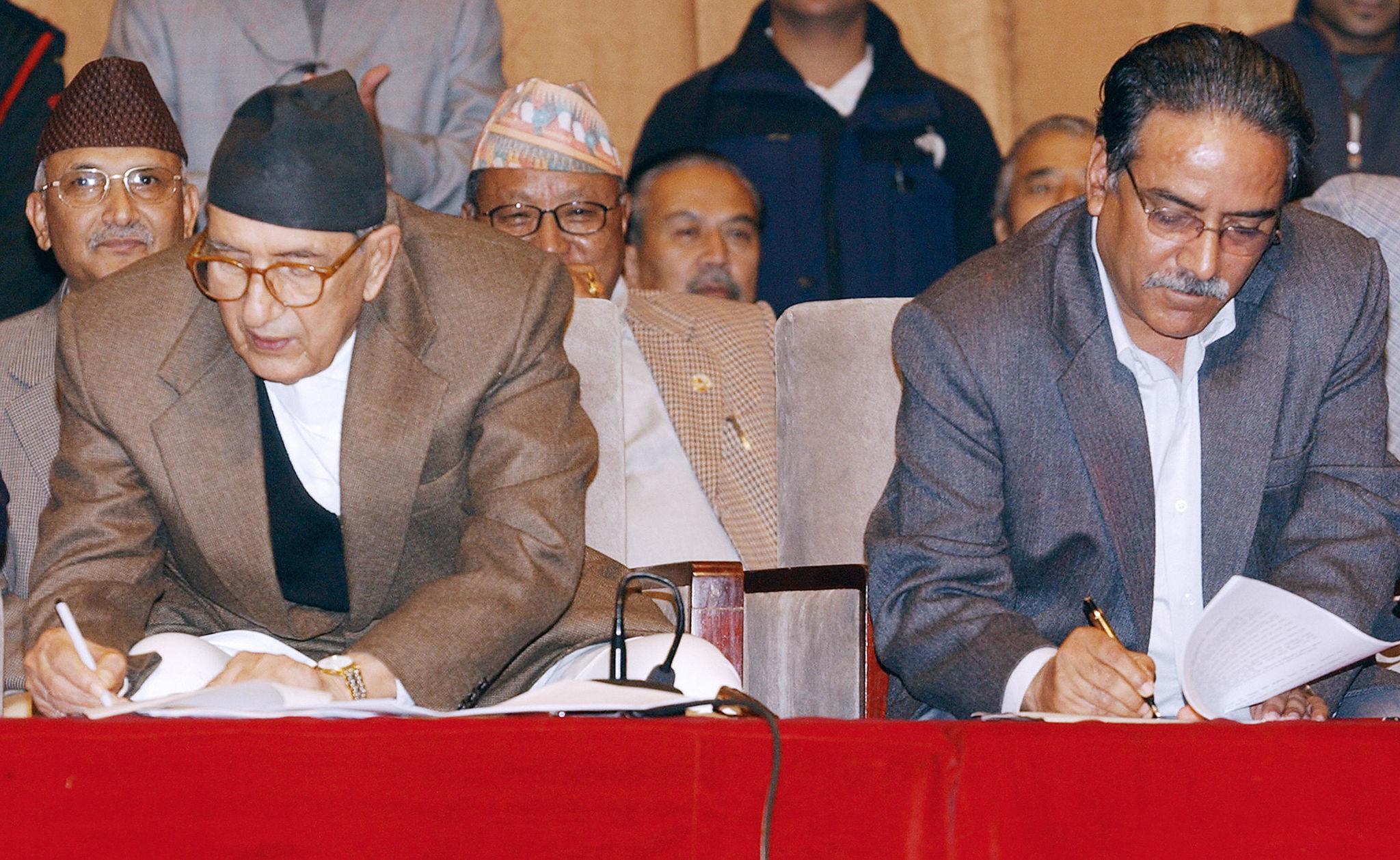
The conflict formally ended on 21 November 2006, when the government and the Maoists signed the Comprehensive Peace Accord.
According to the United Nations Office of the High Commissioner for Human Rights (OHCHR), more than 13,000 people were killed and more than 1,300 remained missing as a result of the conflict. These figures reflect estimates available to the report and should not be interpreted as a final, universally agreed count.
Source: OHCHR — Nepal Conflict Report 2012
2. Nepal Before the People’s War
To understand why the conflict began, it is important to examine Nepal’s political and social conditions during the years preceding 1996.
The People’s Movement of 1990 restored multiparty democracy and established a constitutional monarchy under the Constitution of 1990. However, political liberalization did not immediately resolve the country’s longstanding social, economic and administrative problems.
Poverty and Unequal Development
Many rural communities faced poverty, limited employment opportunities and inadequate access to education, healthcare, roads and other public services. Development opportunities were distributed unevenly between urban centers and remote areas.
These conditions contributed to dissatisfaction with the existing political and economic system.
Land Ownership and Rural Inequality
Landlessness, unequal land distribution and insecure livelihoods affected many farming households. Land reform and improved economic opportunities were important issues in rural political debates.
Caste Discrimination and Social Exclusion
Caste-based discrimination, untouchability, gender inequality and unequal political representation were significant social concerns. Dalits, women, Indigenous nationalities and other marginalized communities faced different forms of exclusion.
These problems became important themes in Maoist political mobilization. However, social inequality alone does not explain why the war began. The Maoist leadership’s ideological commitments, organizational decisions and adoption of armed struggle were also central factors.
Political Instability
Frequent changes of government, disputes between political parties, allegations of corruption and weak state institutions contributed to public frustration.
In some areas, heavy-handed policing and security operations also deepened tensions between local communities and the state.
The conflict therefore emerged from an interaction between structural inequalities, political grievances, state responses and the Maoists’ decision to pursue an armed revolution.
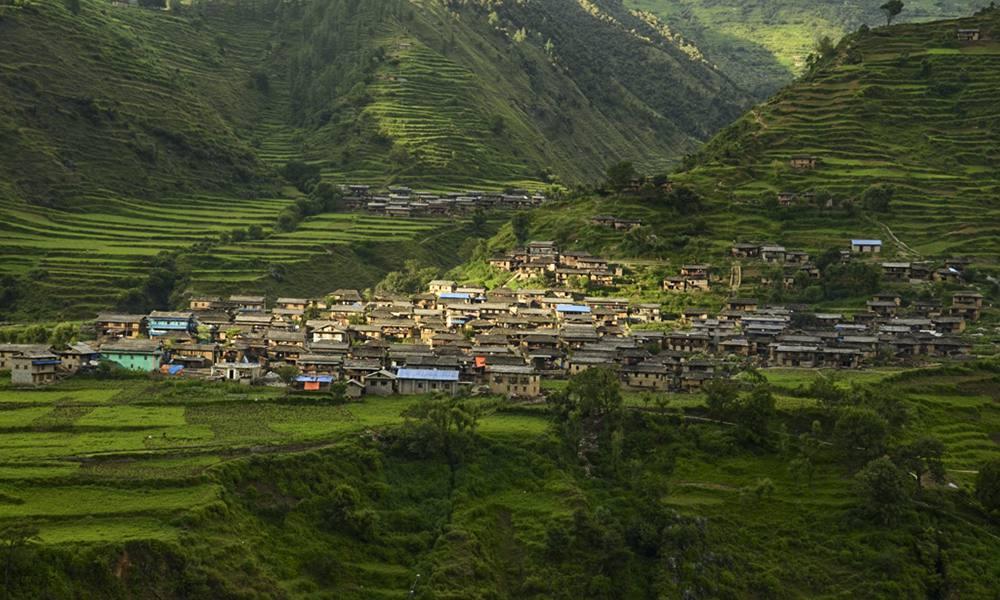
Image: A verified photograph of rural Nepal in the 1990s, showing traditional agriculture or a village landscape.
Alt text: Rural life and agricultural communities in Nepal during the period preceding the People’s War.
Caption: Unequal development, rural poverty and longstanding social grievances formed part of the wider context in which the conflict emerged.
Editorial note: Use a dated archival photograph if available. A contemporary rural photograph should not be presented as a photograph from the 1990s.
3. Who Started the War, and Why?
The armed insurgency was launched by the Communist Party of Nepal (Maoist), whose prominent leaders included Pushpa Kamal Dahal, widely known as Prachanda, and Dr Baburam Bhattarai.
The movement drew on Marxist-Leninist-Maoist ideology and sought fundamental changes to Nepal’s political and social structure.
On 4 February 1996, representatives of the Maoist political movement submitted a 40-point list of demands to the government led by Prime Minister Sher Bahadur Deuba. The demands addressed issues including the monarchy, constitutional change, national sovereignty, land reform, discrimination, education, healthcare and economic inequality.
Some demands concerned social justice and political reform. Others called for changes that would fundamentally transform the existing state.
The Maoists threatened to initiate armed struggle if their demands were not addressed within the stated period. On 13 February 1996, they launched coordinated attacks on government and security installations, marking the beginning of the insurgency.
The demands are an important historical document, but they should be understood alongside the Maoists’ ideological commitment to armed revolution and the government’s response to the emerging conflict.
Source: The 40-Point Demands, February 1996
4. Major Events of the People’s War: A Timeline
The following timeline highlights the principal developments between 1996 and 2006.
1996: The Armed Insurgency Begins
On 13 February 1996, Maoist forces launched attacks on police posts and other state installations. Rolpa, Rukum and neighboring western districts became important early centers of the insurgency.
The government initially relied mainly on police operations. As the Maoist movement expanded, the conflict became increasingly difficult to contain.
1996–2000: Expansion of the Insurgency
During these years, Maoist influence expanded into additional rural districts. The movement established local structures in some areas, while attacks on state institutions and security personnel became more frequent.
In some communities, Maoists gained support by mobilizing grievances concerning inequality and exclusion. In others, people experienced intimidation, forced contributions, abductions and violence.
Civilian experiences varied considerably by location and over time.
2001: The Royal Palace Massacre and Army Deployment
On 1 June 2001, King Birendra, Queen Aishwarya and several other members of the royal family were killed in the Narayanhiti Palace massacre. The official investigation attributed the killings to Crown Prince Dipendra.
The massacre was a separate event from the Maoist insurgency, but it occurred during a period of growing national instability.
Later in 2001, a ceasefire and negotiations between the government and the Maoists collapsed. Following a major escalation in violence, the government declared a state of emergency and deployed the Royal Nepalese Army against the insurgency.
This marked a significant change in the scale and character of the conflict.
2002–2003: Political Crisis and Failed Negotiations
Violence continued as Maoist forces and government security agencies conducted operations across the country.
The dissolution of parliament, disputes over elections and repeated changes in government deepened political instability.
A ceasefire and peace talks in 2003 offered hope for a negotiated settlement, but the process eventually collapsed and armed hostilities resumed.
2005: King Gyanendra Assumes Direct Rule
On 1 February 2005, King Gyanendra dismissed the government and assumed direct executive power.
Political leaders, journalists and civil society activists faced restrictions, while concerns about democratic freedoms intensified.
Opposition to direct royal rule created opportunities for greater cooperation between the seven-party alliance and the Maoists.
November 2005: The Twelve-Point Understanding
In November 2005, the Maoists and the seven-party alliance reached a 12-point understanding.
The agreement created a basis for cooperation against direct royal rule and supported a political process centered on democracy and constituent assembly elections.
April 2006: The Second People’s Movement
Mass demonstrations took place across Nepal in April 2006. Large numbers of citizens protested against the king’s direct rule and demanded the restoration of representative government.
On 24 April 2006, King Gyanendra reinstated the House of Representatives following the sustained protests.
The movement transformed the political environment and helped create the conditions for the peace process.
November 2006: The Comprehensive Peace Accord
On 21 November 2006, the government and the Maoists signed the Comprehensive Peace Accord.
The agreement formally ended the armed conflict and established a framework for political transition, the management of Maoist combatants and weapons, human rights commitments, and the constituent assembly process.
Primary source: OHCHR — Nepal Conflict Report 2012
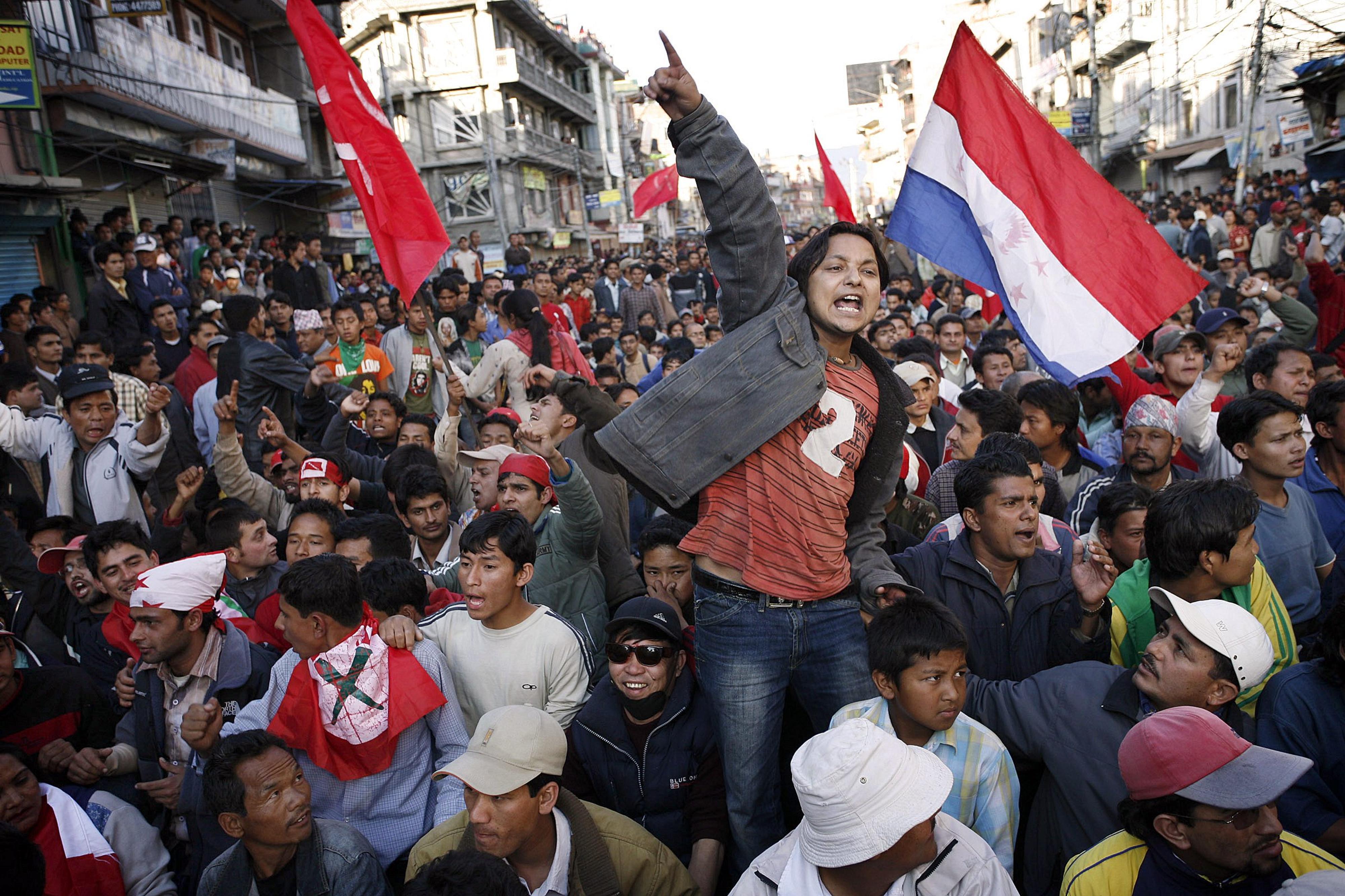
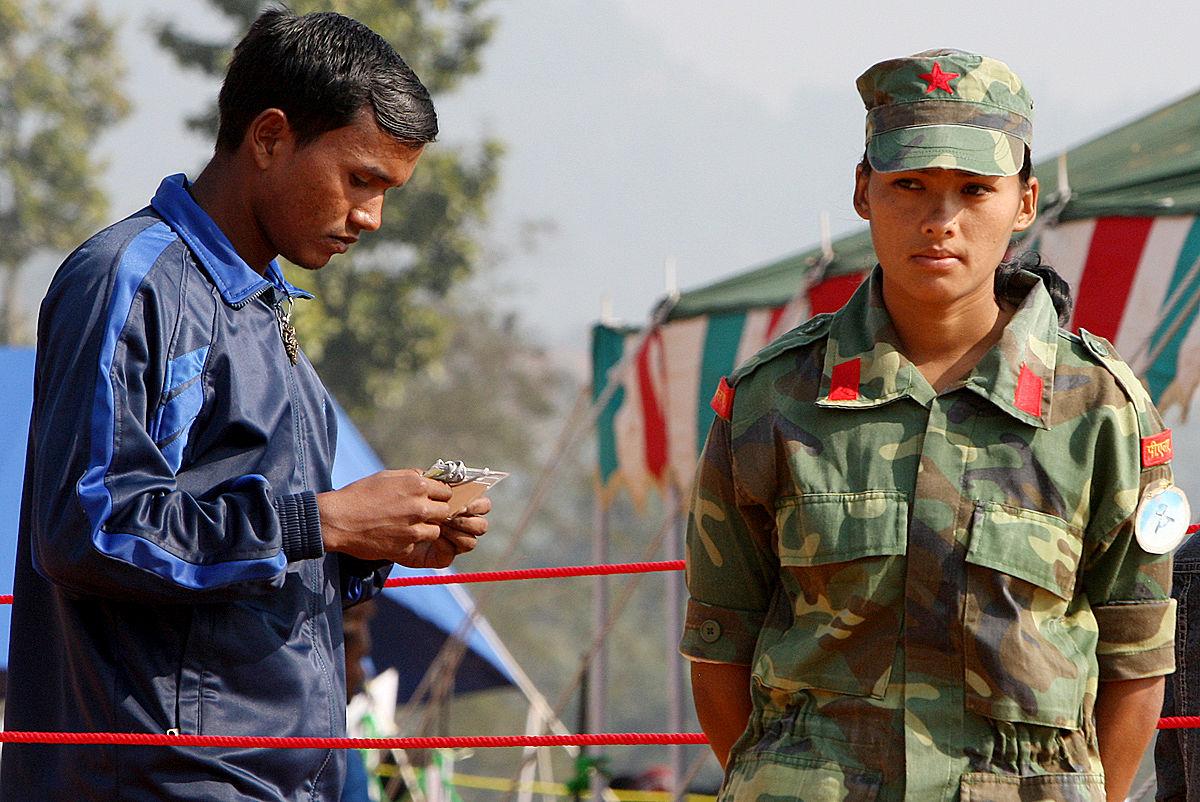
Editorial note: Verify the date, people and event shown in the original photograph before using it.
5. Who Were the Main Parties to the Conflict?
The conflict involved two principal armed sides: the Maoist insurgency and the state security forces. Political parties, civil society organizations and international institutions later played important roles in the transition to peace.
The Communist Party of Nepal (Maoist)
The Maoist party organized the insurgency and operated its armed wing, the People’s Liberation Army. It sought to replace the existing political system and participated in negotiations that led to the peace agreement.
Nepal Police
The Nepal Police was the principal state security institution involved in responding to the insurgency during its early years.
Royal Nepalese Army
The army became actively involved in military operations against the Maoists after the escalation of the conflict in 2001.
Armed Police Force
Established in 2001, the Armed Police Force also became involved in security operations during the conflict.
Political Parties and Civil Society
The seven-party alliance played a major role in the 2006 democratic movement and in negotiations with the Maoists.
Human rights organizations, journalists and civil society groups documented abuses, advocated for civilian protection and called for a peaceful political settlement.
It is important to distinguish armed combatants from civilians. People who were not participating in hostilities were entitled to protection, regardless of their political beliefs, location or perceived association with either side.
6. Human Casualties and Human Rights Violations
The human cost of the People’s War remains one of its most painful legacies.
OHCHR’s 2012 Nepal Conflict Report stated that more than 13,000 people had been killed and more than 1,300 remained missing. The report documented serious violations of international human rights law and international humanitarian law during the conflict.
These figures are historical estimates, and different institutions have published different totals. They should therefore be presented with their sources and context.
Violations Attributed to Maoist Forces
Documented allegations and cases involving Maoist forces included unlawful killings, abductions, torture, intimidation, forced contributions and the recruitment or use of children in the conflict.
Violations Attributed to State Security Forces
Documented cases involving state security personnel included unlawful killings, arbitrary detention, torture, enforced disappearances and other forms of abuse.
Serious violations affected civilians as well as people suspected of participating in the conflict.
The OHCHR report examines cases involving different parties and analyses them under international law. Its purpose is not to create a simple scorecard comparing the two sides. Individual responsibility must be assessed through evidence and appropriate legal processes.
Beyond those killed or disappeared, thousands of people experienced injury, displacement, disruption to education and healthcare, economic hardship and lasting psychological trauma.
Source: OHCHR — Nepal Conflict Report 2012
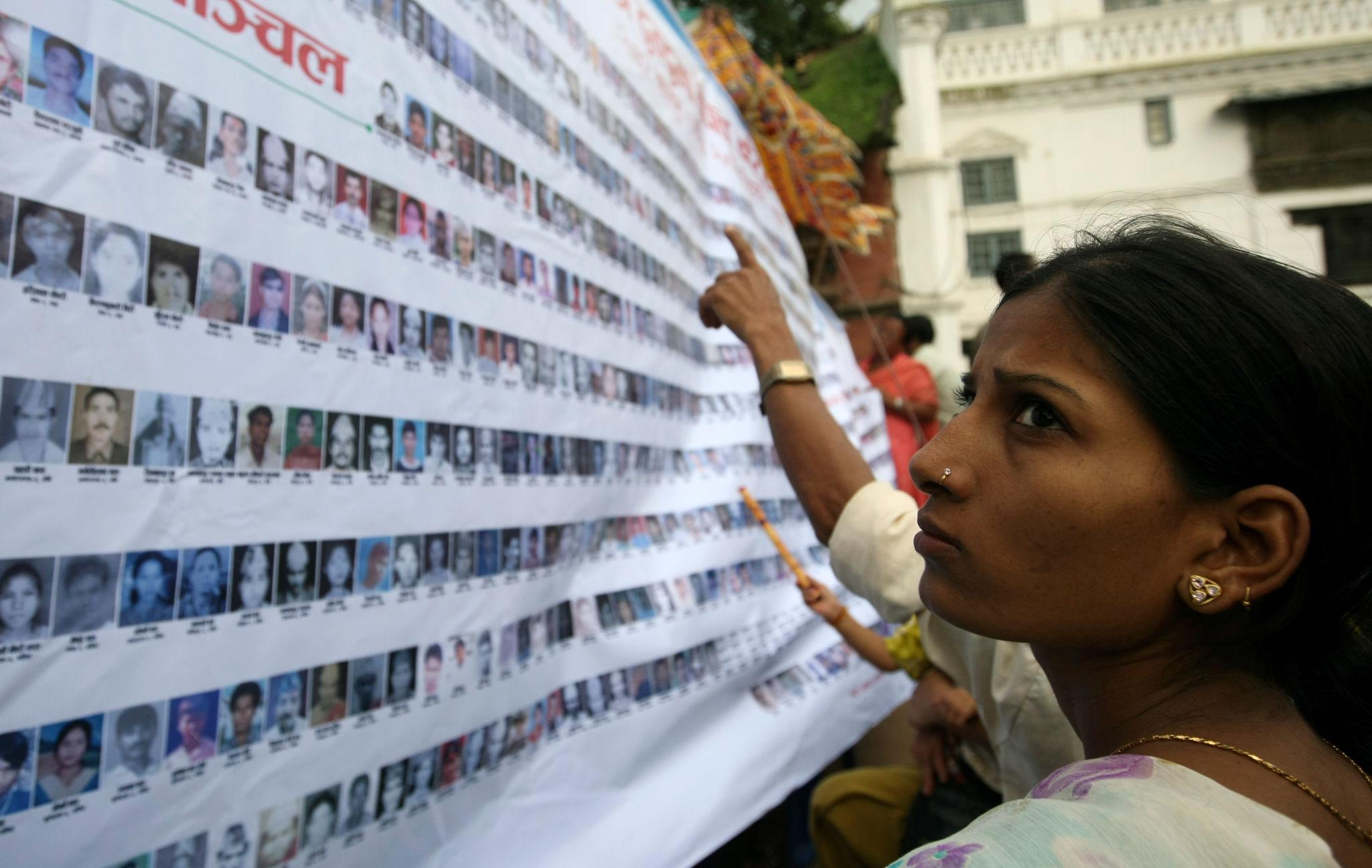
Alt text: Communities and families affected by Nepal’s 1996–2006 armed conflict.
Caption: The consequences of the conflict extended far beyond the battlefield, affecting families, communities and civilian life across Nepal.
Editorial note: Avoid graphic images or photographs of victims whose identities and consent have not been appropriately addressed.
7. How Did the Conflict Affect Ordinary People?
The People’s War changed daily life in many parts of Nepal. Its effects were not limited to those directly involved in fighting.
Displacement and Family Separation
Many families left their homes because of insecurity, threats or violence. Some lost family members, while others spent years searching for relatives who had disappeared.
Education and Children
Schools and educational activities were disrupted in affected areas. Children faced displacement, interrupted education and, in some cases, pressure to become involved in the conflict.
Economic Disruption
Agriculture, local businesses, transport and development activities were affected by insecurity and damage to infrastructure.
For households already experiencing poverty, the loss of income or a family member could create long-term financial difficulties.
Psychological and Social Consequences
Bereavement, uncertainty about missing relatives, displacement and fear placed a lasting burden on many individuals and communities.
The consequences of the conflict therefore cannot be measured only by the number of deaths. They also include the social, economic and psychological effects experienced by survivors.
8. The Comprehensive Peace Accord and the Peace Process
The Comprehensive Peace Accord, signed on 21 November 2006, was a landmark agreement between the Government of Nepal and the Communist Party of Nepal (Maoist).
It formally ended the armed conflict and established commitments concerning political transition, human rights, the management of combatants and weapons, and the creation of transitional justice mechanisms.
The United Nations Mission in Nepal (UNMIN) subsequently supported the monitoring of arms and armed personnel as part of the peace process.
The agreement created the basis for the Maoists’ participation in mainstream politics and the constituent assembly process.
However, ending the fighting did not automatically resolve every consequence of the war. Questions concerning the fate of missing persons, accountability for serious violations, reparations for victims and reconciliation remained important challenges.
Source: Comprehensive Peace Accord — United Nations Peacemaker
9. Major Political Changes After the People’s War
The Constituent Assembly Election of 2008
Nepal held its first Constituent Assembly election in 2008. The Maoists emerged as the largest party in the assembly, which was tasked with drafting a new constitution.
The election represented a major shift from armed conflict towards electoral politics.
Abolition of the Monarchy in 2008
On 28 May 2008, the first meeting of the Constituent Assembly declared Nepal a federal democratic republic.
The decision ended the Shah monarchy, which had ruled Nepal for approximately 240 years.
Promulgation of the Constitution in 2015
Nepal promulgated its new constitution on 20 September 2015.
The Constitution established a federal democratic republican system and provided a constitutional framework for federalism, secularism, inclusion and fundamental rights.
These changes were connected to the People’s War, but they were not the result of the insurgency alone. The democratic movement of 2006, the role of political parties, civil society and other social movements, and negotiations among political actors also contributed to the transformation.
10. Achievements, Limitations and Unresolved Questions
The legacy of the People’s War is complex. It should be assessed by examining both political change and the human cost of the conflict.
Political Transformation
The monarchy ended, republican government was established, and the constituent assembly process created a new path for constitutional change.
Greater Attention to Social Inclusion
Issues affecting women, Dalits, Indigenous nationalities, Madhesi communities and other historically marginalized groups gained greater prominence in national political debates.
However, discrimination, unequal opportunities and economic disparities have not disappeared.
Human and Economic Costs
Thousands of deaths, unresolved disappearances, displacement and damage to livelihoods left lasting consequences for individuals, families and communities.
Incomplete Transitional Justice
The peace process created commitments to truth, justice and reparations. Yet many victims and families have continued to seek answers, accountability and meaningful redress.
A balanced historical assessment must acknowledge the political changes associated with the conflict without overlooking the serious violations and suffering that accompanied it.
11. Why Transitional Justice Still Matters
For many families, the consequences of the People’s War did not end with the signing of the peace agreement.
Families of missing persons continue to seek information about their relatives. Survivors and victims’ families seek truth, accountability, reparations and recognition of their suffering.
Important elements of transitional justice include:
- Establishing the fate and whereabouts of missing persons.
- Investigating serious human rights violations impartially.
- Ensuring accountability in accordance with the law and applicable standards.
- Providing appropriate reparations and support to victims and their families.
- Preserving the historical record and preventing future abuses.
Reconciliation should not mean ignoring serious crimes. Equally, accountability should be based on evidence, due process and fair legal procedures.
A durable peace requires more than an end to armed violence. It also requires public trust, respect for human rights and meaningful attention to the needs of victims.
12. Lessons for Present and Future Generations
Nepal’s People’s War offers several important lessons.
Social injustice must be addressed. Poverty, discrimination, unequal access to public services and political exclusion can deepen public dissatisfaction.
Political objectives do not justify abuses. The pursuit of equality or political change does not make attacks on civilians, torture, abductions or unlawful killings acceptable.
State power must remain accountable. Security operations must respect the law and the rights of civilians, including people suspected of supporting an armed movement.
Peace agreements must be followed by justice. Ending a conflict is a major achievement, but victims also need truth, accountability, reparations and recognition.
History should be studied through evidence. Historical understanding improves when political claims are assessed against documented events, reliable research, human rights reports and the experiences of affected communities.
Conclusion
Nepal’s People’s War was a defining chapter in the country’s modern history. It emerged from a combination of political grievances, social and economic inequalities, revolutionary ideology and the decision to pursue armed struggle.
The conflict and the wider political movement surrounding it contributed to the end of the monarchy, the establishment of a republic and the transition towards a new constitutional order.
However, these political changes came at a significant human cost. Thousands of people were killed, many remained missing, families were displaced, and communities experienced lasting social and economic harm.
Understanding the People’s War requires recognizing both its historical significance and its human consequences. Neither political achievements nor the suffering of victims should be excluded from the historical record.
The success of political change should not be measured only by whether a system of government has changed, but also by whether people can live with greater dignity, equality, security and justice.
References and Further Reading
1. United Nations Office of the High Commissioner for Human Rights (OHCHR)
Nepal Conflict Report 2012: An Analysis of Conflict-Related Violations of International Human Rights Law and International Humanitarian Law Between February 1996 and 21 November 2006.
2. United Nations Peacemaker
Comprehensive Peace Accord, 2006.
3. South Asia Terrorism Portal
The 40-Point Demands, February 1996.
4. Human Rights Watch
Nepal: Between a Rock and a Hard Place —Civilians Struggle to Survive in Nepal’s Civil War.
These sources provide historical documentation, the text of the peace agreement, and analysis of the conflict’s political and human rights dimensions.
About the Author
Saroj KC writes about history, society, technology, workplace practices and issues relevant to Nepal. This article is intended to provide a historical overview based on published documentary sources.
Editorial note: Verify all historical claims and image permissions before publication. This article is an educational overview, not a substitute for the full historical and legal record.
Community discussion
Comments 0
Comments are reviewed before they appear publicly. Be respectful and avoid sharing private information.
No approved comments yet. You can be the first to share a useful thought.
Add a comment
No account or login is needed. Your comment is emailed for moderation and is published only after approval in the CMS.