Prachanda, UML and other opposition forces are preparing to challenge Prime Minister Balendra Shah. But can they turn political dissatisfaction into a nationwide movement or could the protests develop beyond their control?
By Saroj KC
Nepal has entered another politically sensitive period. Only a year after a youth-led uprising shook the country’s political establishment and brought down the government of KP Sharma Oli, opposition parties are preparing to take their fight against the new government to the streets.
This time, the target is Prime Minister Balendra Shah.
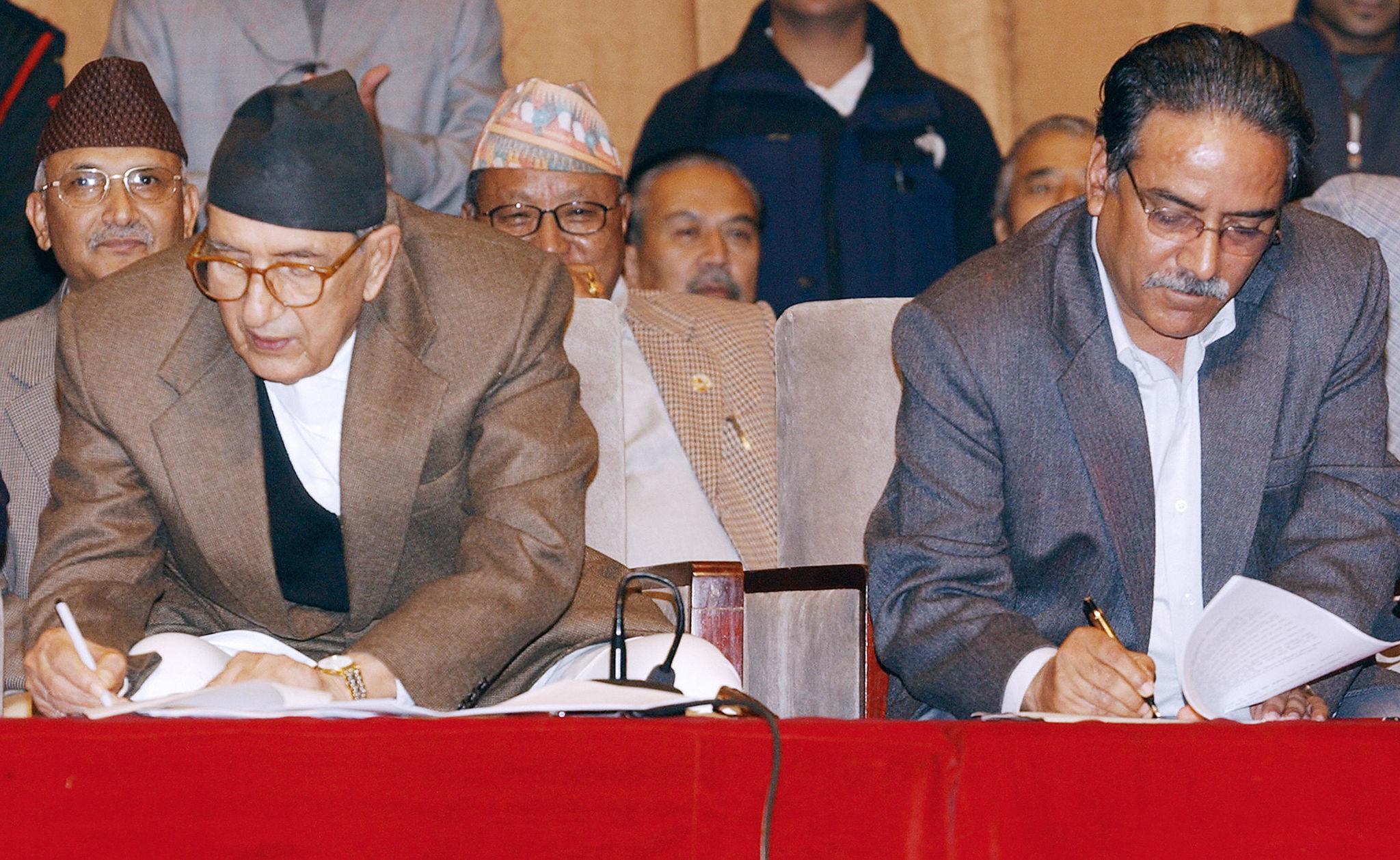
Pushpa Kamal Dahal ‘Prachanda’, coordinator of the Nepali Communist Party, has spoken openly about preparations for a protest movement against the government after Dashain and Tihar. CPN-UML Secretary Mahesh Basnet has also announced plans for a nationwide movement involving UML and other political parties after Dashain, Tihar and Chhath.
These statements deserve attention, but they should not be mistaken for proof that another mass uprising is inevitable.
The more important questions are: Why are the opposition parties dissatisfied with the government? What do they actually want? Can they unite despite their own political differences? And what might happen if ordinary citizens join a movement that established political parties initially intend to lead?
Nepal’s recent history offers a reason to take these questions seriously.
A new government, but familiar political tensions
Balendra Shah’s rise to national leadership represented a significant change in Nepal’s political landscape. His image as a leader outside the traditional political establishment, combined with public frustration over corruption and political instability, helped him become a major political force.
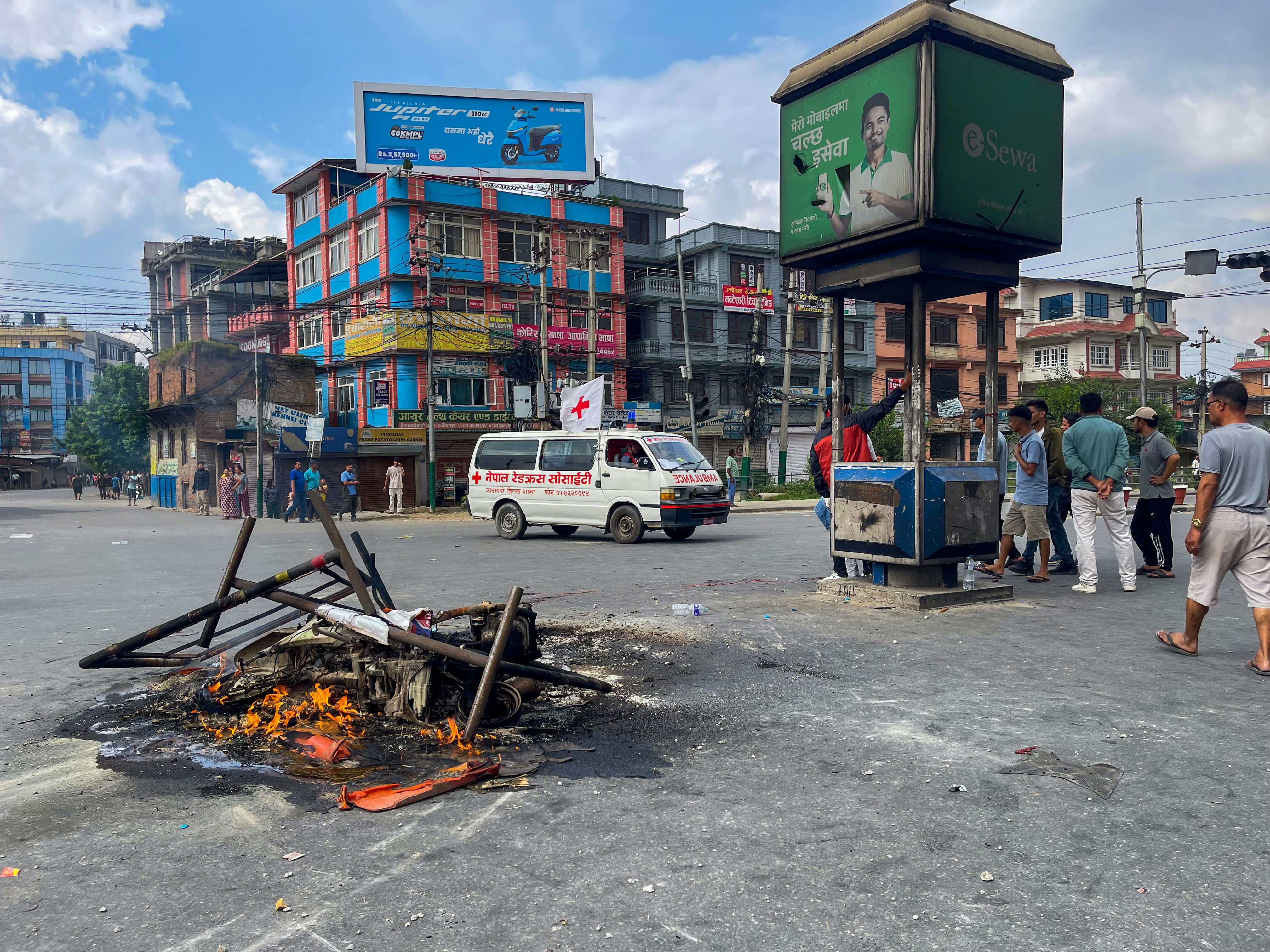
The September 2025 Gen Z uprising accelerated that transformation. Young people took to the streets over corruption, political privilege and the government’s restrictions on social media. The protests escalated after security forces used lethal force against demonstrators. The resulting unrest led to Oli’s resignation and a major political transition.
The Rastriya Swatantra Party subsequently won a decisive victory in the March 2026 parliamentary election, and Shah’s government took office on March 27.
The new administration inherited enormous expectations.
People wanted better governance, accountability, employment opportunities, effective public services and an end to the political practices they believed had prevented Nepal from moving forward.
But winning an election and meeting public expectations are two very different challenges.
A government can receive a strong mandate and still face criticism over its decisions, implementation and treatment of citizens. The Shah administration is now experiencing that reality.
Why are opposition parties preparing for protests?
There is no single reason behind the opposition’s dissatisfaction. Different parties have different political interests, but several issues are becoming central to their criticism.
The controversy over landless people and informal settlements
One of the most sensitive issues has been the government’s campaign to clear informal settlements and recover public land.
The government presented its actions as part of an effort to protect public property and address unauthorised occupation. However, the demolition operations raised serious concerns about displacement, rehabilitation and the rights of families who had lived in those settlements for years.
According to The Kathmandu Post, demolition operations began in parts of Kathmandu Valley on April 25 and 26, 2026. The campaign triggered clashes between residents and police.
On May 8, the Supreme Court issued an interim order directing the government not to evict or displace informal settlers without following due legal procedures. The court also highlighted the need to protect affected people’s access to housing, education, health services and food.
This is an important distinction: the government has a responsibility to protect public land, but it must also respect the law and the fundamental rights of affected citizens.
For a family facing the loss of its home, this is not simply a political debate. It is a question of security, dignity and survival.
The opposition has an opportunity to question the government’s approach. However, it must also offer a practical alternative. Protecting vulnerable families and managing public land lawfully should not be treated as mutually exclusive responsibilities.
Questions about the government’s performance
The Shah administration came to power promising rapid reforms. However, the implementation of those promises has already attracted scrutiny.
A review published by The Kathmandu Post on July 4, 2026, found that the government had completed 38 of the 100 commitments in its initial action plan during its first 100 days.
The report also highlighted progress in some areas, including digital governance and anti-corruption measures, while identifying delays and controversies in others.
This does not mean the government has failed. A hundred days is a relatively short period in which to assess an administration, particularly one promising structural reform.
But it does show that the government is already facing questions about the gap between its promises and its delivery.
A government elected on the promise of change must be willing to explain what it has achieved, where it has fallen short and how it intends to address the problems.
Workers, farmers, students and trade unions
Prachanda has specifically mentioned workers, farmers, students, intellectuals and trade unions in his criticism of the government.
These groups have traditionally been important to Nepal’s left-wing political movements. By raising their concerns, the Nepali Communist Party is attempting to frame the proposed movement as more than a campaign by political leaders.
The argument is that the government is failing groups that need protection and representation.
But whether these communities will actually support the opposition is another matter.
Workers may be more concerned about wages and job security. Farmers may prioritise agricultural prices and access to markets. Students may want better education and employment opportunities.
A successful movement must connect with these everyday concerns. Political slogans alone cannot guarantee public participation.
Is this about government policy—or the return of the old political establishment?
This may be the deeper political question.
Balen Shah’s political identity was built around challenging the established political culture. His rise reflected public dissatisfaction with parties that had dominated Nepal’s politics for years.
Now, some of those same political forces are preparing to challenge his government.
The political irony is difficult to ignore.
The old establishment is criticising a government that emerged from a political transformation partly driven by public frustration with the old establishment.
This does not automatically make every criticism of Balen wrong. A government must be accountable regardless of how it came to power.
However, opposition parties also need to demonstrate that their campaign is about public interest rather than simply recovering political influence.
If they want people to join them, they will need to answer a difficult question:
What will they do differently if they return to power?
People who demanded change in 2025 may not be satisfied with a movement that simply brings familiar political leaders back into government.
What do Prachanda, UML and other opposition parties actually want?
Public statements show that opposition leaders want to challenge the government’s policies and working style and build a broader political front.
Prachanda has spoken about bringing opposition parties together, while Mahesh Basnet has announced plans for a nationwide movement involving UML and other parties.
But there is an important difference between announcing a protest and agreeing on a common political programme.
The opposition parties may have several objectives:
- Force the government to reconsider controversial policies.
- Increase political pressure and demand negotiations.
- Challenge the government’s public credibility.
- Build a united opposition front.
- Create conditions for a future change of government.
These objectives can overlap, but they are not identical.
There are also disagreements within the opposition itself. A September 20 report by Ratopati highlighted internal divisions among parties discussing post-festival protests. Nepali Congress President Gagan Thapa, for example, expressed disagreement with the idea of political polarisation over the Constitution.
This is significant.
Political parties may agree that they are unhappy with the government, but that does not mean they agree on what should replace its policies or who should lead the movement.
Organising a joint rally is one thing. Maintaining a united political front is another.
Can the opposition actually bring down Balen’s government?
A large protest does not automatically remove a prime minister.
This is one of the most important points in understanding the coming political contest.
Street mobilisation can create pressure, disrupt normal government operations, influence public opinion and force political negotiations.
But a change of government must also follow the constitutional and parliamentary process.
The opposition would need a viable parliamentary route to replace the existing administration and establish an alternative government.
Therefore, the number of people attending a demonstration and the number of lawmakers supporting a new government are two very different measurements of political power.
The Shah government has a strong electoral mandate. That does not make it immune to public criticism, but it does mean that opposition parties cannot assume that street demonstrations alone will bring it down.
They need more than public anger. They need a credible political alternative.
The lesson of 2025: protests do not always follow the plans of political leaders
Nepal’s experience in September 2025 should be a warning to every political party.
The Gen Z uprising was not a conventional movement organised by established opposition parties to replace one government with another. It was driven largely by young people frustrated with corruption, political privilege and restrictions on social media.
The protests escalated dramatically after security forces opened fire on demonstrators. The government subsequently collapsed amid widespread unrest.
The human and economic consequences were severe.
According to Reuters, the government estimated that the 2025 protests caused more than $586 million in economic damage. The unrest resulted in 77 deaths and more than 2,000 injuries.
Public buildings, private property and important state institutions were damaged or destroyed.
These figures demonstrate that political unrest is not simply a contest between political leaders. Ordinary citizens, businesses, workers and public institutions often bear the greatest cost.
The lesson is not that every future protest will become another uprising. It is that political leaders should never assume they can completely control public anger once a movement grows beyond its original demands.
Could the proposed movement become another Gen Z uprising?
It is possible, but there is currently no sound basis for predicting that it will.
There is a fundamental difference between the two situations.
The 2025 Gen Z movement was largely driven by young people organising outside traditional party structures. The proposed post-festival movement, by contrast, is being openly discussed by established political leaders.
That difference could determine how the next movement develops.
A party-led protest usually has identifiable organisers, leadership structures and political demands. A spontaneous public movement can develop a much wider agenda, sometimes faster than its original organisers can respond.
Young people are also not a single political group.
Those who protested against Oli in 2025 will not automatically support Prachanda, UML or Balen in 2026. Similarly, someone who disagrees with Balen’s policies may still reject the political establishment that is now opposing him.
Some young people may support the government. Others may oppose particular decisions without supporting any opposition party. Many may simply judge every political leader by their actions.
This is why the assumption that Gen Z will automatically join the opposition movement is premature.
The real question is whether the government creates conditions for wider public dissatisfaction—and whether the opposition can offer something more convincing than criticism.
Four possible outcomes after the festivals
Nobody can responsibly predict exactly what will happen after Dashain and Tihar. However, the current political developments suggest four broad possibilities.
Scenario 1: The movement remains under party control
Opposition parties organise rallies, demonstrations and public meetings. Their supporters participate, and the government faces pressure to reconsider some decisions.
Negotiations may follow, and the movement could gradually lose momentum without producing a major political change.
This is a conventional political outcome and remains possible if the protests stay focused on specific policies.
Scenario 2: The protests become a wider national confrontation
The demonstrations attract people beyond party cadres. More districts become involved, and protests continue for an extended period.
If the government and opposition fail to engage in meaningful dialogue, tensions could rise. Transport, businesses, public services and daily economic activity may be affected.
The consequences would depend heavily on whether both sides keep the demonstrations peaceful.
Scenario 3: Ordinary citizens take ownership of the movement
This is the most unpredictable possibility.
Imagine that opposition parties begin the protests, but students, young people, workers and independent civic groups start joining for their own reasons.
Their demands may expand beyond the original political programme. Issues such as corruption, unemployment, political accountability, constitutional reform and institutional performance could become central.
At that point, the original organizers might discover that they are no longer setting the agenda.
This is not a prediction that another Gen Z uprising is coming. It is a possibility worth considering because Nepal has recently experienced how quickly a protest can change direction.
Scenario 4: The movement fails to attract public support
There is another possibility that political announcements often overlook: people may simply choose not to participate.
Political parties can announce a nationwide movement, but public participation depends on whether citizens believe the demands represent their concerns.
If people see the campaign mainly as an attempt by former governing parties to regain power, support may remain limited.
The government could then withstand the protests, while the opposition may emerge politically weakened.
What would prolonged protests mean for Nepal’s economy?
Political instability comes at a difficult time for Nepal.
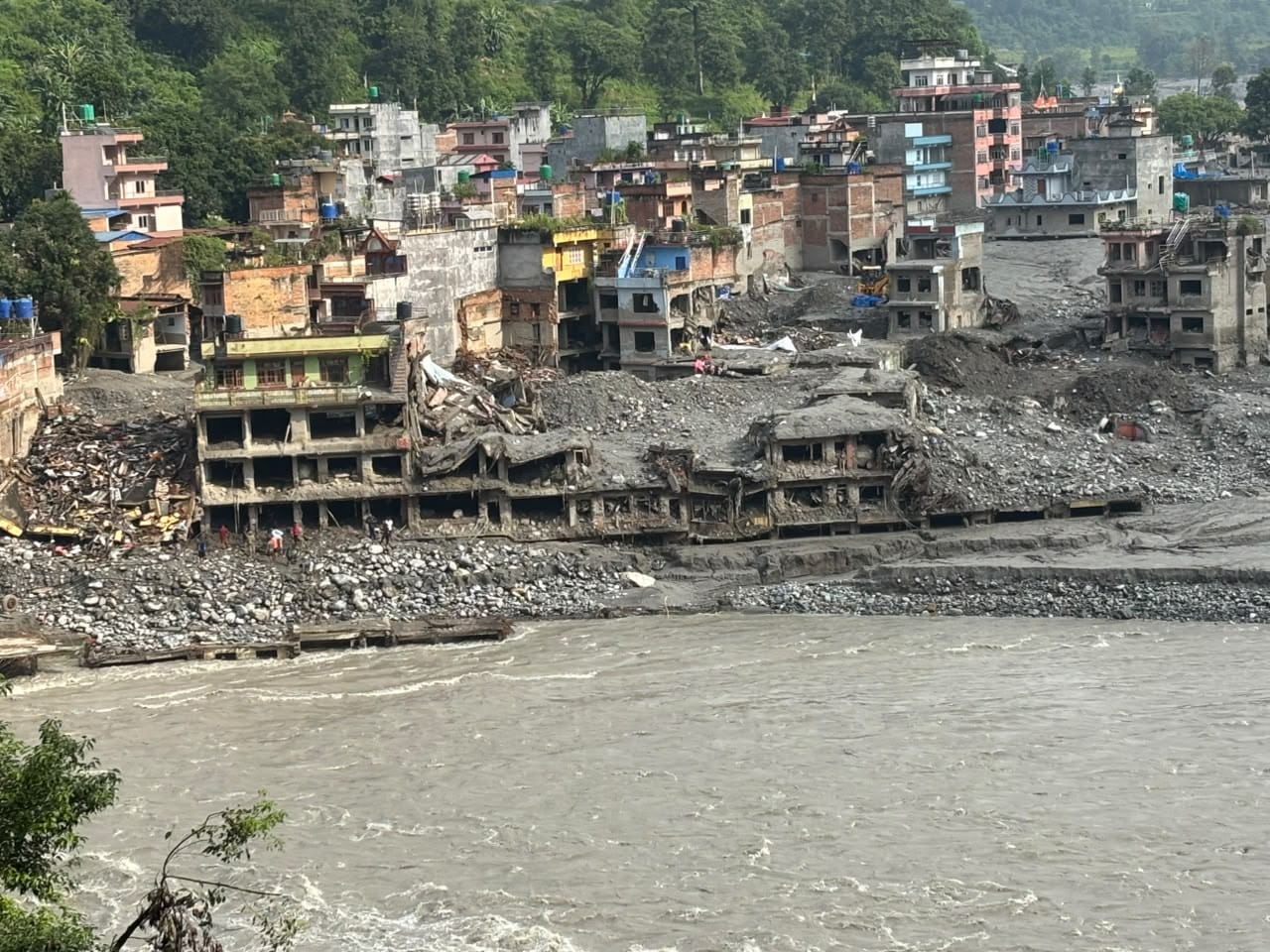
The country is still dealing with the consequences of the 2025 unrest. It is also facing the enormous task of responding to the devastating floods reported in late August 2026.
An Associated Press report published on September 7 described the destruction of thousands of homes, damage to roads and bridges, and disruption to hydropower projects. The estimated damage of $2.56 billion represents a significant burden for a country with an annual budget of around $14 billion.
This context should influence how political parties approach confrontation.
Prolonged protests would not hurt only the government. They could affect small businesses, tourism, transportation, construction, daily wage earners and families already struggling with the cost of living.
A shopkeeper who loses several days of business does not benefit because a political party wins an argument. A worker who cannot reach a job site still has bills to pay. A business considering investment may delay its plans if political uncertainty increases.
Nepal needs accountability and public debate. It also needs continuity in essential services, disaster recovery and economic activity.
Those goals should not be treated as opposites.
The government’s response could determine how far the protests go
The Shah administration should not dismiss every criticism as an attempt by the old political establishment to return to power.
Concerns involving informal settlements, due process, institutional independence and the treatment of vulnerable communities deserve serious answers.
At the same time, opposition leaders have a responsibility to keep demonstrations peaceful and present clear, realistic demands.
The government’s response will be crucial.
If demonstrations remain peaceful, the administration should allow lawful protest, maintain dialogue and address legitimate grievances through parliamentary and legal processes.
If violence occurs, security agencies must act within the law and use proportionate measures.
The events of 2025 showed the danger of excessive force. Instead of containing public anger, a disproportionate response can intensify a crisis and create consequences that are difficult to reverse.
Opposition parties must also recognize that political disagreement does not justify intimidation, destruction or attacks on public and private property.
Nepal cannot afford another cycle in which preventable violence creates more victims and leaves ordinary citizens paying the price.
Why does Nepal keep returning to the streets?
This may be the most important question in the entire debate.
Nepal has experienced major political movements, constitutional changes, changes of government and repeated promises of a new beginning. Yet public frustration continues to return.
One reason is that political change and institutional change are not the same thing.
Replacing a prime minister does not automatically create jobs. Changing the ruling party does not automatically eliminate corruption. A new government cannot immediately repair every weakness in public administration, education, health care or the economy.
Nor does a new generation of political leaders automatically create a new political culture.
The cycle continues when citizens see little improvement in their everyday lives while political leaders remain focused on power, alliances and the survival of their governments.
Breaking that cycle requires more than another election or another protest.
It requires institutions that work regardless of who is in power. It requires opposition parties that can scrutinise the government without trying to paralyze the state. It requires governments that accept criticism and respect constitutional limits. It requires security agencies that protect citizens and uphold the law.
Most importantly, political change must produce measurable improvements in people’s lives.
The real test is bigger than Balen, Prachanda or Oli
It is tempting to frame the coming months as a contest between individual leaders.
Will Balen survive? Can Prachanda unite the opposition? Will UML return to power? Can Mahesh Basnet mobilize people across the country?
These are relevant political questions, but they are not the whole story.
The deeper test is whether Nepal’s political forces have understood what the public demanded through the events of 2025.
The Shah government must prove that its promise of change means accountable, lawful and effective governance not simply a faster way of making decisions.
The opposition must prove that it is fighting for democratic accountability and people’s concerns, not merely seeking another opportunity to govern.
And citizens must be able to demand change without being pushed into another cycle of violence and destruction.
After Dashain and Tihar, Nepal may see a major opposition movement. It may remain a conventional political campaign, or it may develop in ways that even its organizers cannot predict.
At this stage, neither a government collapse nor another Gen Z-style uprising should be treated as inevitable.
One thing, however, is clear:
Nepal does not need another political victory that changes the people in power but leaves the problems of ordinary citizens untouched.
A protest can challenge a government. An election can replace it. But only better institutions, responsible leadership and meaningful improvements in people’s lives can break the cycle that keeps bringing Nepal back to the streets.
Editor’s Note
This article distinguishes between publicly reported political developments and possible future scenarios.
How this article was researched
- Party statements and protest plans: on-the-record announcements reported by Nepali media, including Prachanda’s remarks to the All Nepal Farmers Federation central committee (18 September 2026) and CPN-UML Secretary Mahesh Basnet’s remarks at the UML central committee meeting (24 September 2026). Each is linked in the source list below.
- Government performance and squatter eviction questions: reporting from The Kathmandu Post, including the Supreme Court order on evictions and the review of the government’s first 100 days.
- Economic context: the Finance Ministry’s damage estimate from the 2025 protests, reported by Reuters.
- Scenario discussion: the four outcomes described at the end of this article are my own analysis of publicly reported positions. They are possibilities, not predictions, and no political actor has been quoted as planning any of them. The scenarios discussed are analytical possibilities, not confirmed political decisions or predictions.
Community discussion
Comments 0
Comments are reviewed before they appear publicly. Be respectful and avoid sharing private information.
No approved comments yet. You can be the first to share a useful thought.
Add a comment
No account or login is needed. Your comment is emailed for moderation and is published only after approval in the CMS.